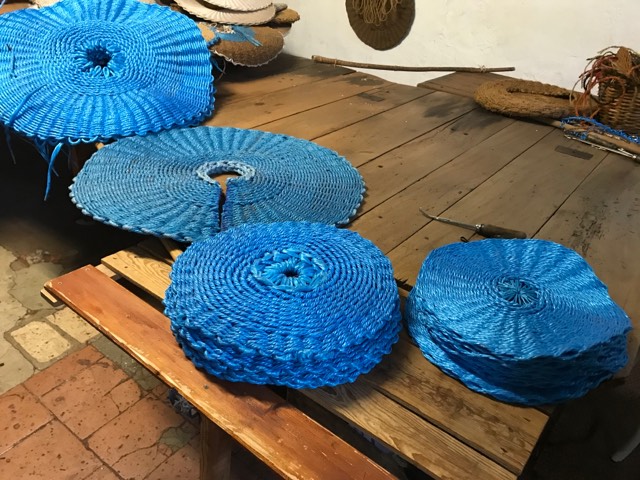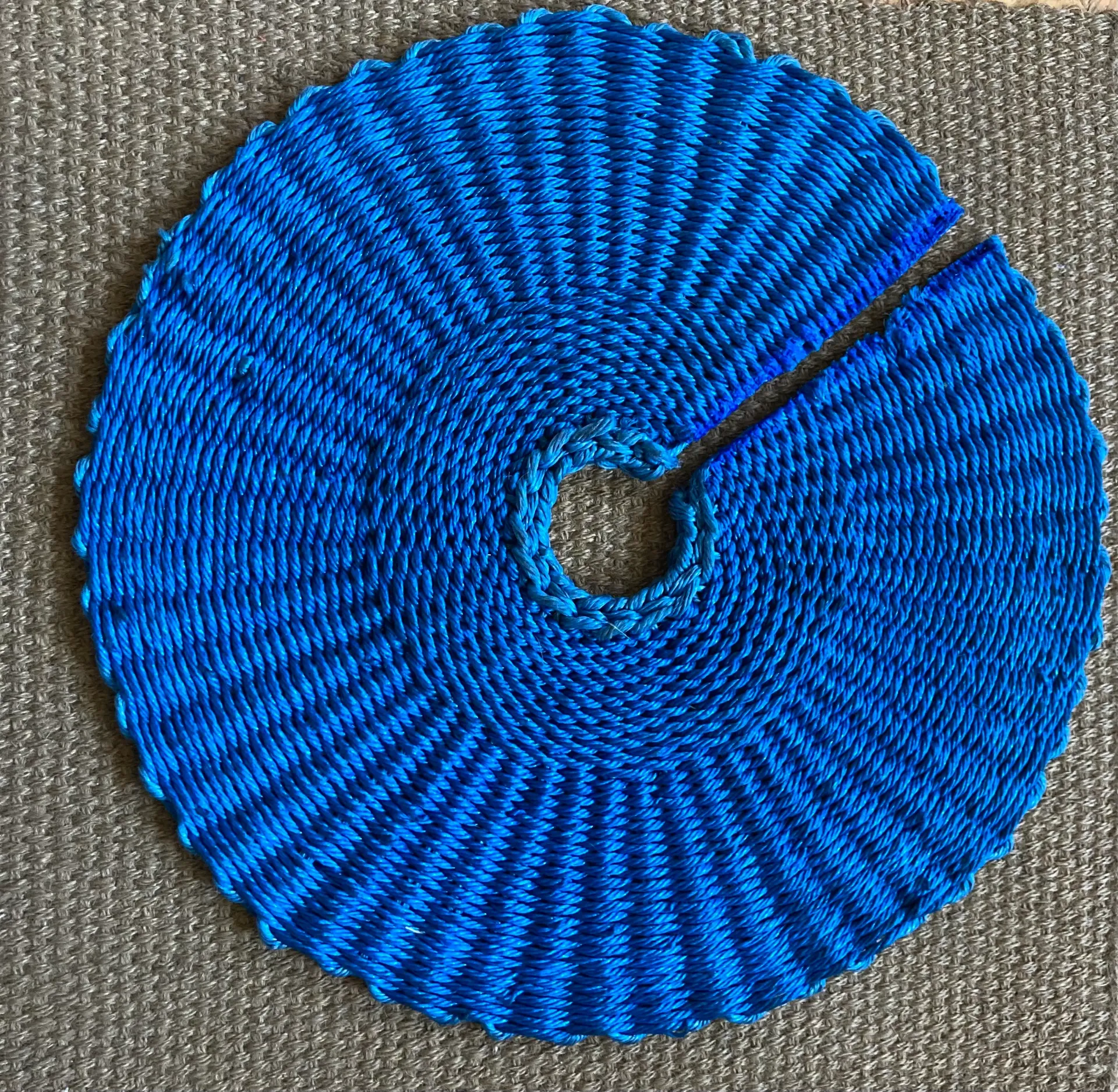
Flat split polypropylene filter for filtration and pressing, available in several diameters.
Its split structure allows for effective drainage during pressing. It is used for cider, wine, fruit pressing, as well as for olives and olive paste.
The polypropylene used is manufactured in France, at the Corderie Provençale, and has a food safety certificate.
For any specific needs, do not hesitate to contact us.
Our polypropylene filters are available in diameters ranging from 25 cm to 250 cm.
They are made from a material certified for food use.
The thickness of the filter is approximately 1 cm.
The central hole for filters from 25 to 40 cm is 7 cm. For filters over 40 cm it is 11 to 12 cm.
The central hole can be adapted on request: blocked, reduced or enlarged according to your equipment and usage.
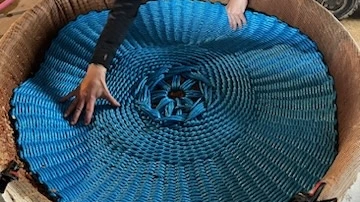
These filters can be used for different types of pressing, including for olive oil, apple juice and wine.
For olive oil
The use of a heat source at the time of pressing can facilitate extraction and improve yield. However, this practice alters the quality of the oil: loss of polyphenols, modification of aromas and hot extraction. It is therefore generally not recommended for producers seeking high-quality olive oil. However, the prior kneading of the paste before spreading it between the layers remains an important step.
For apple juice
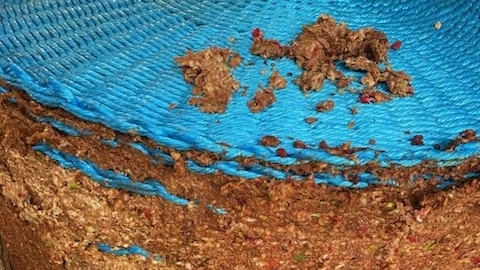
The ideal spacing between the filters is generally around 6 to 8 cm, although some work with 10 to 15 cm. A tighter stack, with more filters, increases the filtering surface and improves drainage by reducing the height of pulp between the filters. This can facilitate pressing, especially when the material becomes more viscous. Conversely, the more filters there are, the less volume of pulp per cycle: it is therefore a compromise between extraction yield and quantity processed.
For wine
If the grapes are destemmed, it is advisable to increase the number of filters. The pomace without stems being more compact, a greater number of filters improves the surface/volume ratio, facilitates drainage, and can enhance extraction yield.
The main issue of cleaning is to eliminate all residues of pulp or organic matter, which could ferment and alter the taste during the next use.
Routine cleaning
Immediate cleaning with warm water is recommended just after use. It is all the more effective when done quickly, before the residues dry.
Soaking and degreasing
In case of more significant soiling, the filters can be soaked in warm water, around 40 °C, with a suitable degreasing product. It is essential to rinse thoroughly afterwards to eliminate any cleaning residue.
High-pressure cleaning
For nylon or polypropylene filters, high-pressure cleaning may be considered, with a moderate flow rate and, if possible, hot water between 40 and 80 °C. This helps to dissolve residues and facilitate sanitisation, while preserving the structure of the weaving.
Disinfection
A spot soak in a suitable solution can be used to disinfect and remove certain natural discolourations. Again, careful rinsing is essential before reuse.
Drying
After cleaning, the filters should be completely air-dried, ideally in the sun. Complete drying is essential to avoid mould, fermentation, or degradation.
Descaling
When residues have dried on the filter, it is possible to detach them by light mechanical action before a new rinse.
Before reuse
Rinsing with clear water before each new use is recommended, in order to eliminate any dust or storage residues.