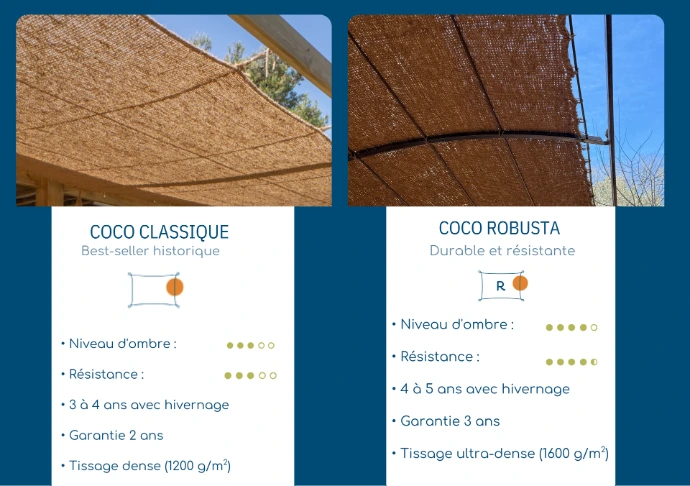
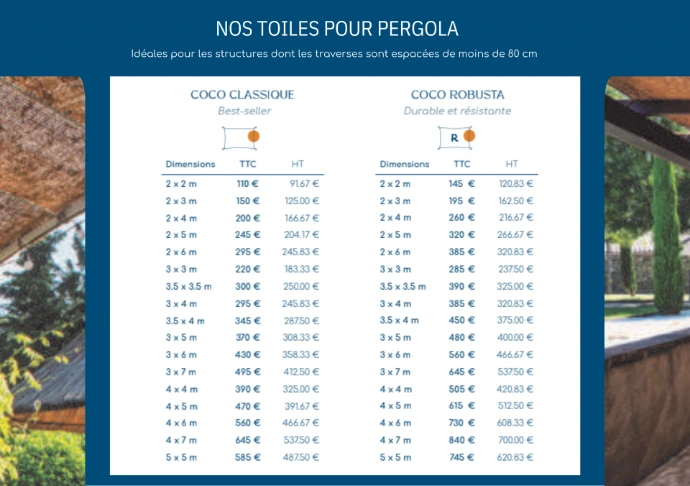
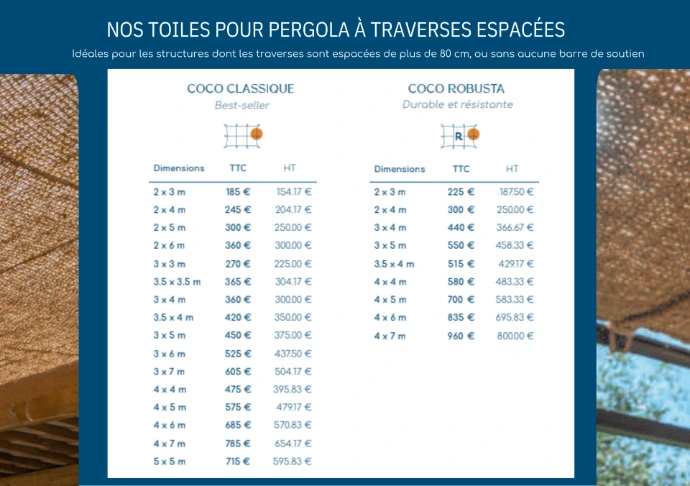
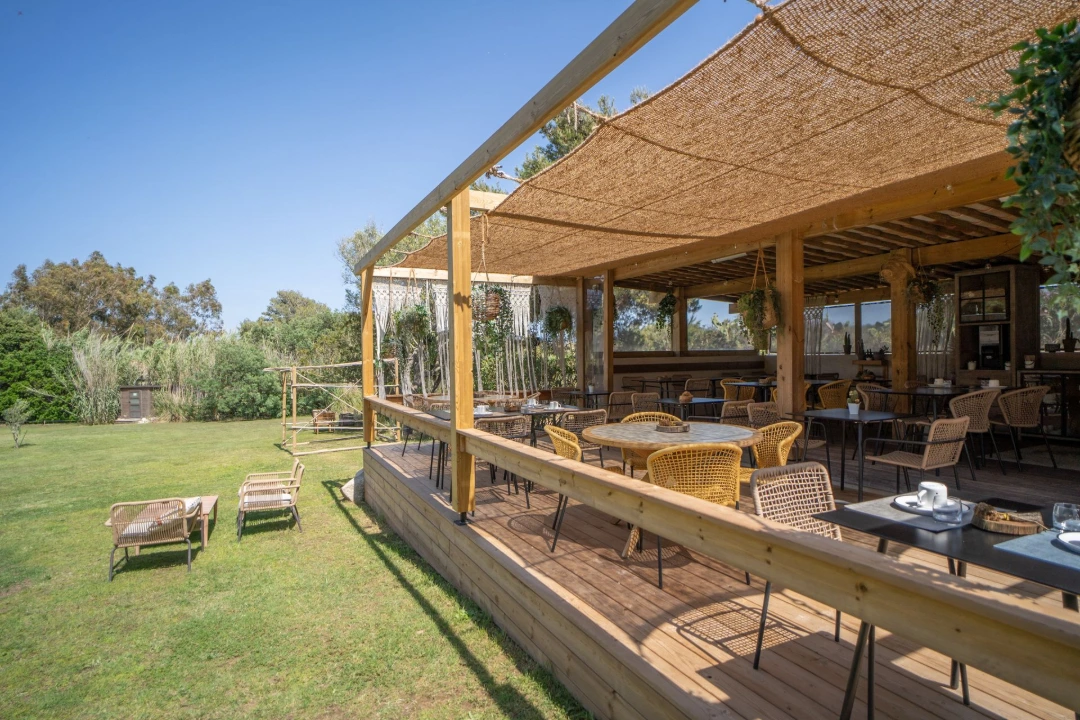
Tarifs des ombrières pour pergola
1
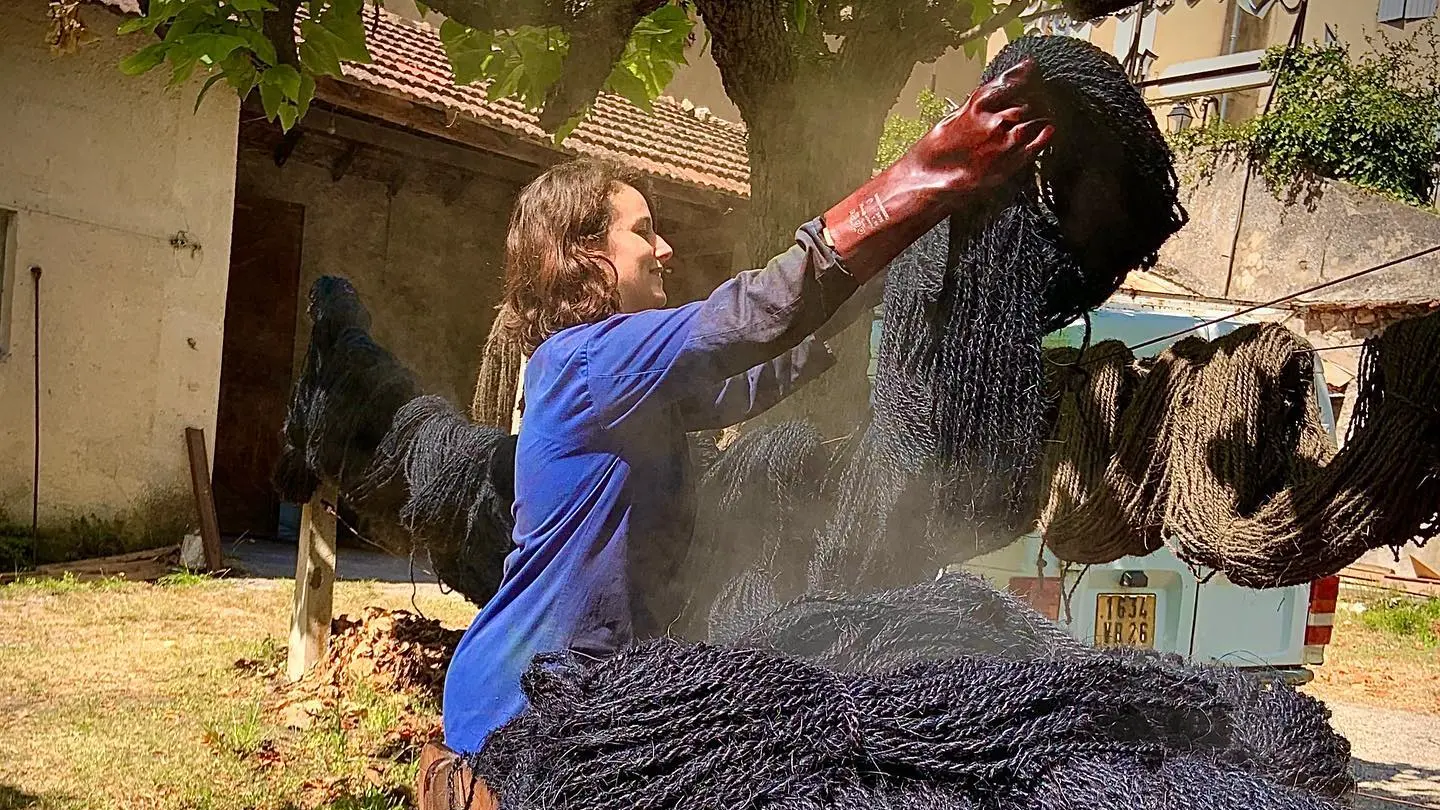
Dyeing
The coconut fiber skeins are dyed on-site in a range of 15 colors. Frédérique hangs them in the courtyard of La Scourtinerie, then stores them in a building next to the workshop, sorting them by color.
2
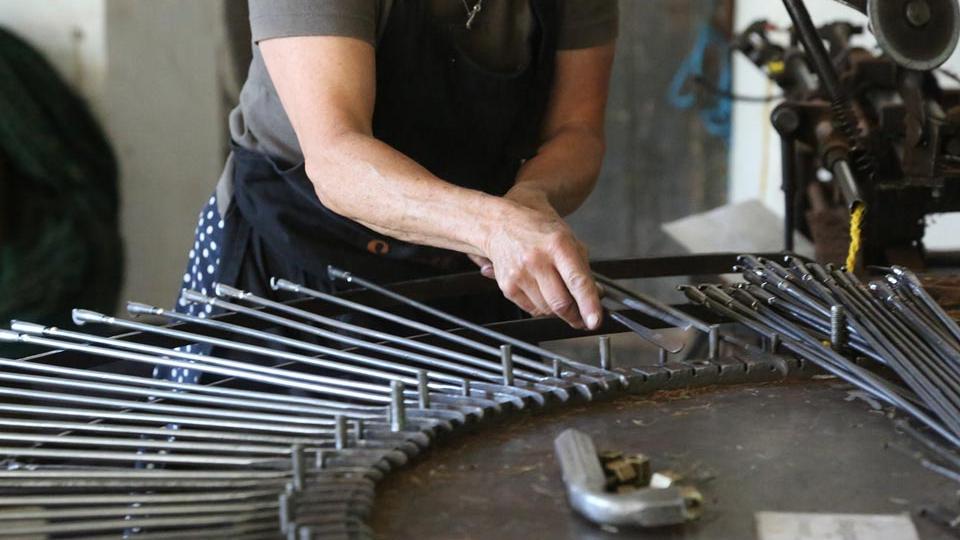
Installing the Needles
The steel pins are fixed onto a wheel, in an odd number, to weave the weft of the Scourtin.
3
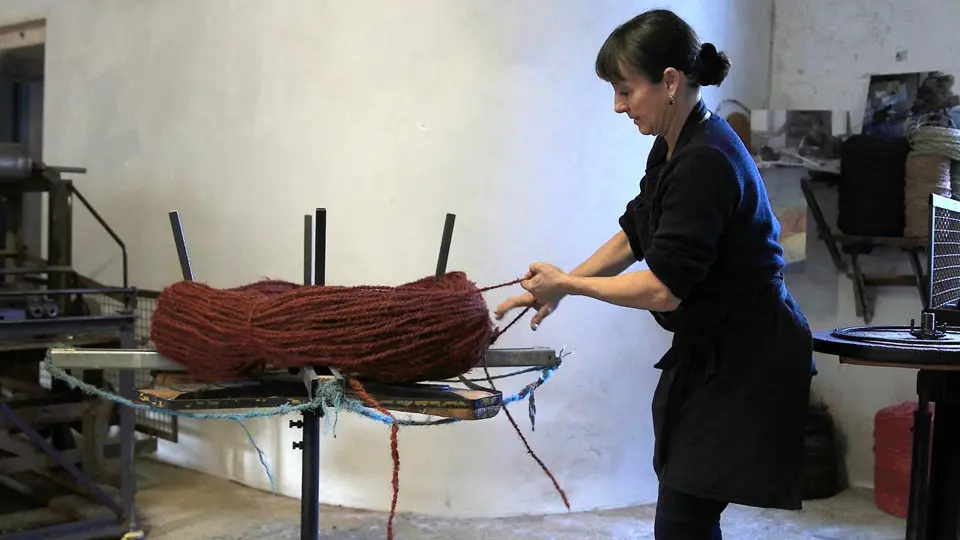
Winding the Skeins
For generations, the Fert family has sourced coconut fiber rope from the state of Kerala, in southern India. This rope is hand-spun and selected for its high quality. In the workshop, it is wound into spools to make it easier to handle for weaving.
4
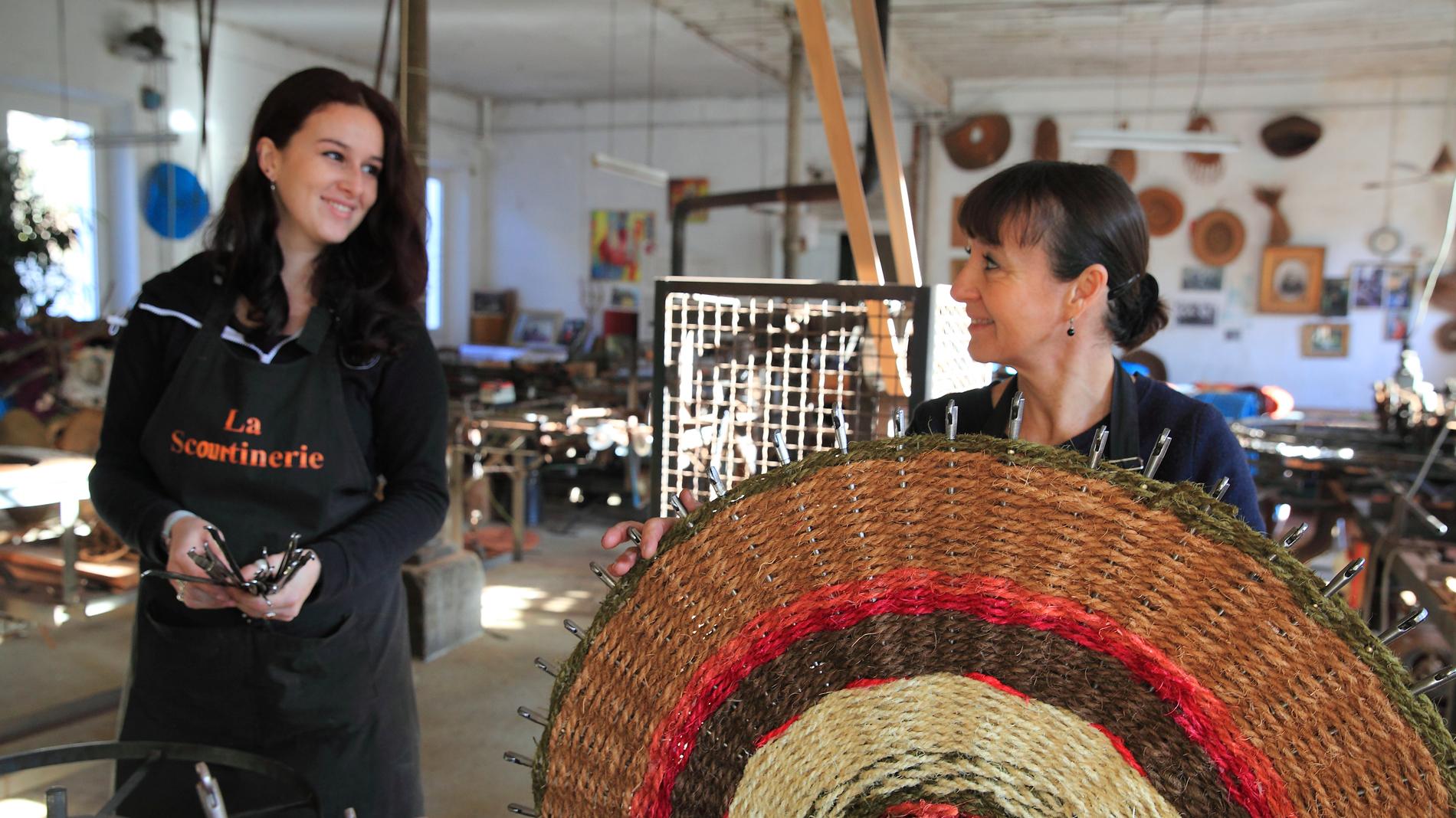
Weaving
The process begins by hand before electricity takes over. The loom creates the weft accompanied by the regular clicking sound of the working pins. Depending on the inspiration or the order, the weaving can be either solid or multicolored, with the weaver alternating spools of thread to create different patterns.
5
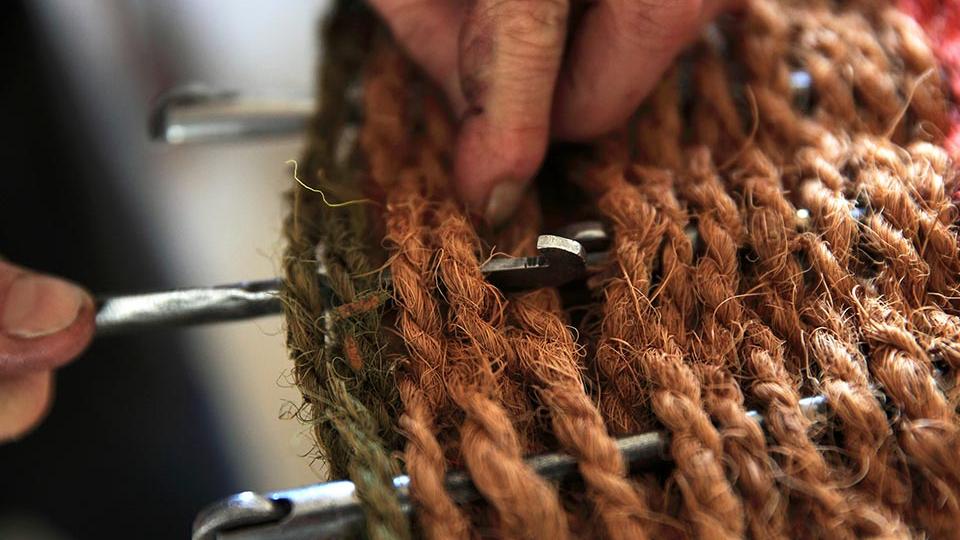
Removing the Needles
While reinforcing the weave, the machine called the “tireuse” removes the pins, which are then replaced by the warp thread through this action.
This is the final step where a machine assists the manual work.
6
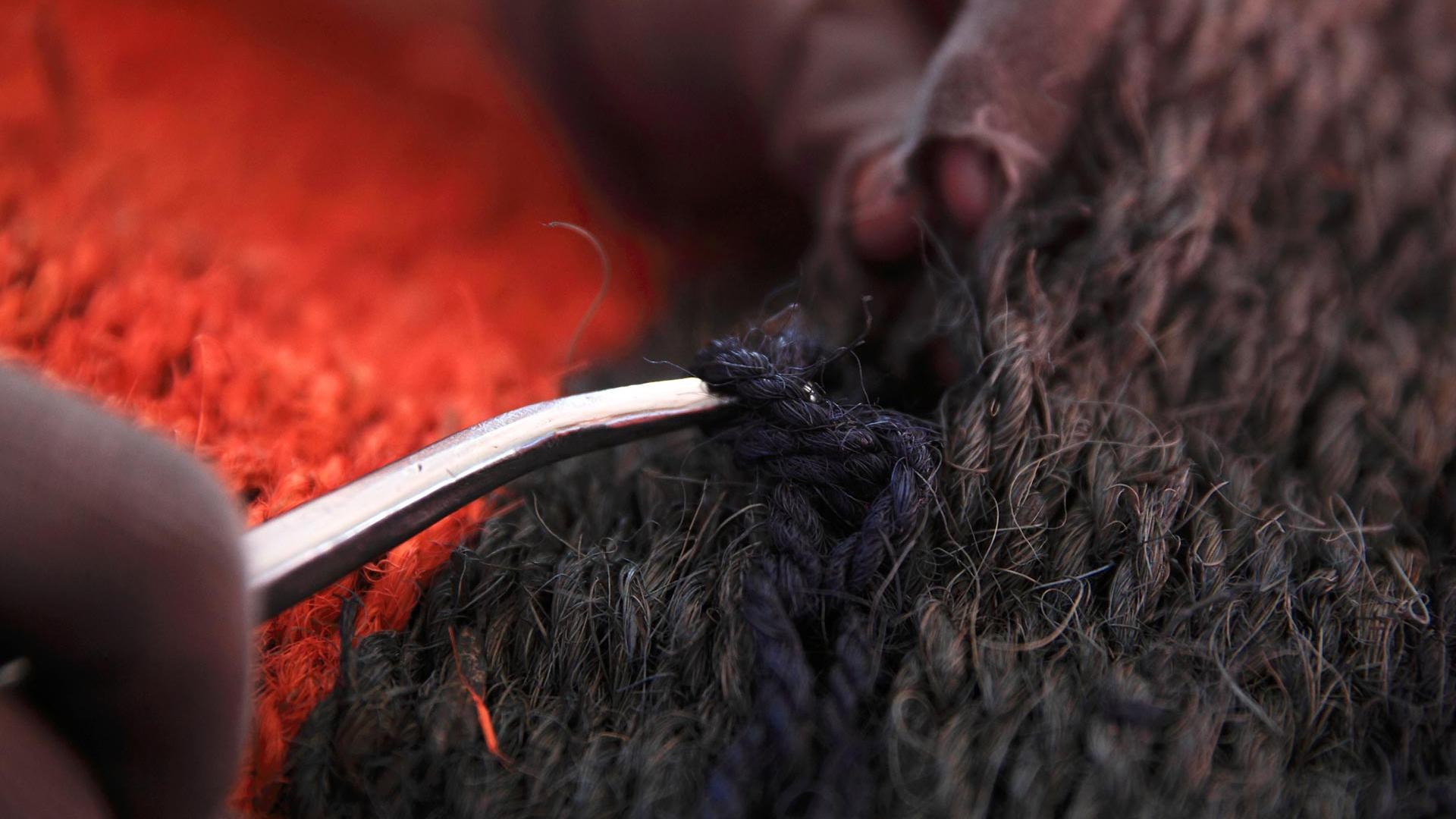
Manual Finishing
To finish the Scourtin, there is no machine, only the skilled hands of the Scourtiniers. The center of the rug is completed using hooks and needles. This step allows the Scourtin to retain its traditional round shape or be shaped into an oval by working the center of the rug from right to left with the hook.
FRENCH COMPANY

LIVING HERITAGE COMPANY
ANCESTRAL KNOW-HOW

NATURAL AND SUSTAINABLE RESOURCE
FRENCH COMPANY
LIVING HERITAGE COMPANY
ANCESTRAL KNOW-HOW
NATURAL AND SUSTAINABLE RESOURCE